H o i d e o l o g y . c o m is a knowledge transfer platform for publishing psychoeducational research works developed by Dr. K. Ho and her team. Dr. K. Ho’s psychoeducational research works aim to provide self-help information based on scientific psychological research to help people enhance their understanding of psychosocial issues, clarify intrapersonal-interpersonal misconceptions, and gain useful techniques in resolving human conflicts toward potential and continuous growth, happiness, genuine confidence, and mental healthiness.
H o i d e o l o g y . c o m 是一個出版 Dr. K. Ho 及其團隊創作和開發的心理教育研究知識轉移平台。她的心理教育研究旨在提供基於科學性心理學研究的自救訊息,幫助人們增強對心理社會問題的理解,澄清人際間的誤解,並獲得解決人類衝突的有用技巧,以實現潛在和持續的成長、幸福、真誠的信心和心理健康。
H o i d e o l o g y . c o m psychoeducational research projects
- WhatIsAGoodMother_Project Channel, Season 1 (Ho & Chu, 2025-2026) Learn more …
- WhatIsAGoodMother_Project Survey **Welcome to join! ** Learn more …
- WhatIsAGoodMother_Project Channel, Season 2 (Ho & Chu, 2026-2027; expected in June 2026-April 2027) NEW! Learn more …
- The Parental Values Study: A Qualitative Study (Ho & Wong) (under preparation); expected to be launched in June 2026)
- Domestic Conflicts & Homicides: A Case of Hong Kong (under preparation; expected to be launched in 2026)
- Parenting Tips When Cell-Phone/Social Media/A.I./Technology Is Frying Your Child’s Brain and Messing up Your Parenting Plans (under preparation; expected to be launched in 2026)
- Dr. K. Ho’s Annotation (2005-2010s) of Career Psychology’s Literature (1970s-2010s) (under preparation; expected to be launched in 2026)
H o i d e o l o g y . c o m 心理教育研究 項目
- 《什麼是好媽媽_研究》頻道, 第 1 季 (英中) (Ho & Chu, 2025-2026) 了解更多 …
- 《什麼是好媽媽_研究》民調 (英中) **歡迎參加! ** 了解更多 …
- 《什麼是好媽媽_研究》頻道, 第 2 季 (英中) (Ho & Chu, 2026-2027) 新! 了解更多 …
- 《一分鐘 *好媽媽* 心理法寶》 頻道 (中文) (準備中; expected in June 2026-) 新! 了解更多 …
- 《父母價值觀》研究 (Ho & Wong) (準備中; expected to be launched in 2026)
- 家庭衝突與謀殺:以香港為例 (中文) (準備中; 2025-)
- 當手機/社群媒體/人工智慧/科技正煎熬你孩子的大腦並擾亂你的育兒教養計畫時, 你的育兒教養技巧可以怎樣? (英中) (準備中; expected to be launched in 2026)
Introducing the WhatIsAGoodMother_Project Channel (WIAGM Channel), Season 1 — by Dr. K. Ho
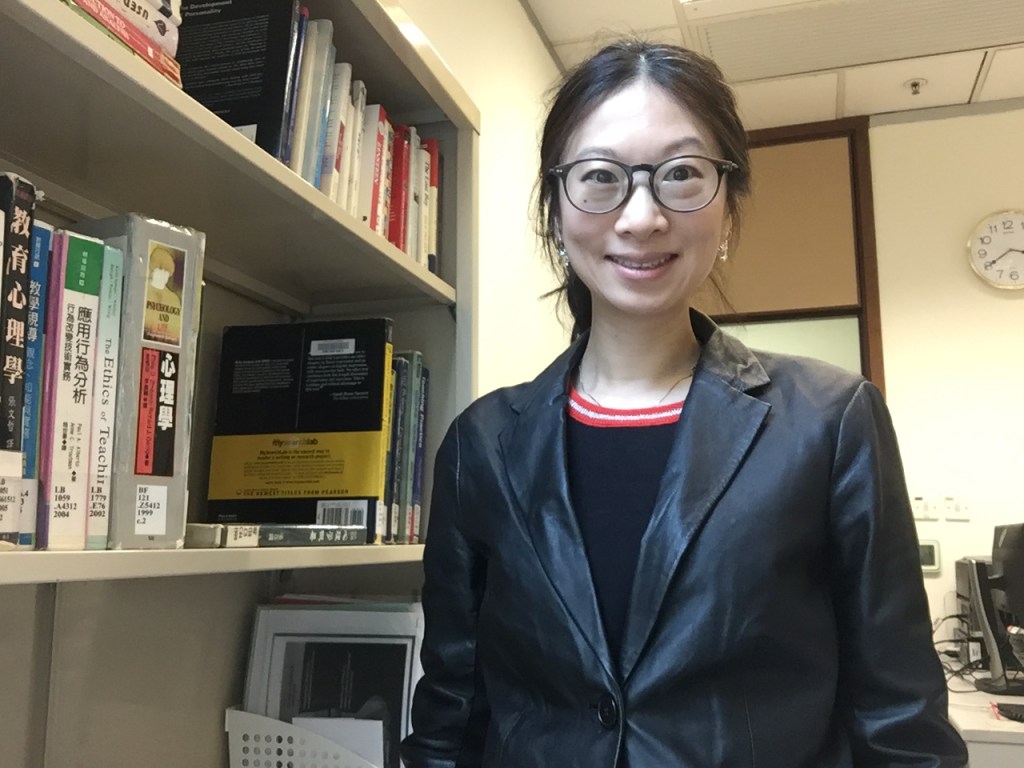
Hi! This is Dr. Katty (“Katy”) Ho. I earned my Ed.D. in Educational Psychology from The Chinese University of Hong Kong, my M.Div. from Gordon-Conwell Theological Seminary, my M.A. in Psychology from Boston University, and my B.A. cum laude (Hons) in Psychology from The University of California at Berkeley. I have been in the field of psychology in the past 30 years with 13 years of experience working as Lecturer of Psychology to undergraduates and post-graduates in Hong Kong (at CityUHK, CUHK, EdUHK) and 10 years of extensive research and project experiences in the USA and HK (CLAP@JC-Schools, CUHK, CityUHK, Vision New England, Gordon-Conwell Theological Seminary, McBer & Company/The HayGroup, UC Berkeley, etc.). My WhatIsAGoodMother_Project Channel aims to provide psychoeducation on Parenting Research to clients, students, professionals, and general readers and viewers anywhere in the world.
Parenting Style (emotional attitude) is the building block to one’s psychological well-being and one’s development of mental-personality-interpersonal-marital-health problems and disorders. Better knowledge and understanding of the critical parent-child processes can help you learn how to prevent the development of those problems in your family, as well as enhance functioning in the family.
In Season 1, we have made two types of videos to achieve these goals: Theoretical (Literature Review) PRESENTATIONS and COMMENTARIES.
What is included in our Theoretical (Literature Review) PRESENTATION? In our WIAGM Channel’s Season 1 (2025/26), I authored and created the scripts and PowerPoint slides, as well as edited all the videos and subtitles (Ho & Chu, 2025, August 5; 2025, August 14; 2025, November 3; 2025, December 16). My scripts and PowerPoint slides provide background information of the research literature (theory), method, and findings of the original authors’ work that we reviewed. Then, I invited Genie Chu, my Undergraduate Research Apprentice, who is a Psychology and Philosophy student at the University of Sydney, to recite the scripts and presented the materials with me. She is my faithful collaborator!
The three theoretical/empirical studies that we reviewed in Season 1 were Darling & Steinberg (1993) on the definition of Parenting Style as Context (Parenting Style), Garcia & Serra (2019) on the short/long-term effects of Parenting Style on adolescent and adult child’s psychosocial-emotional outcomes (Parenting Style Effects) , and Rohner (2021) on his comprehensive Interpersonal Acceptance-Rejection Theory that comes with the Personality Subtheory (Parental Coldness Effects), Coping Subtheory, and Sociocultural Systems and Model Subtheory (Rejection Copers-Systems).
What is a COMMENTARY? Our WIAGM Channel COMMENTARIES were spontaneous conversations/discussions between me and Genie on the specific topics under scrutiny. In each of those COMMENTARY episodes, Genie raised some thoughtful questions and I responded to the questions using the theories and research that we reviewed in our previous episode(s). I also added more illustrations and/or clips to enrich our contents and enhance viewers’ understanding of the life applications. Season 1’s four COMMENTARIES were Episode 3 on “Parenting Style,” Episode 4 on “Parenting Style Effects,” Episode 7 on “Parental Coldness Effects,” and “Rejection Copers-Systems.” To honor Genie’s leadership, I placed her as first author of Season 1’s COMMENTARIES.
I hope that you will enjoy learning with us through these videos, each had been crafted with care by myself using traditional human annotation method with my own brain and hands (no A.I. tools or ChatGPT have been used–in fact, I don’t have ChatGPT on my computer), zoom recording, traditional PowerPoint slides making, and the CapCut video-editing software. I hope you will appreciate our joy in presenting and discussing these serious topics, in order that you will also learn about these critical theories/research and apply them in your life!
Please leave us your constructive comments on our videos! We’ll appreciate your feedback greatly!
Dr. K. Ho (April 22, 2026, Hong Kong)